Preparing a Single, EP, or Album for Deezer
Before publishing your music on Deezer, the project must be properly prepared. The distributor sends the platform not only the audio file, but also the information needed to correctly identify and present the release.
This includes, in particular, the title of the track or project, the artist name, the cover art, and the various metadata required for distribution.
This preparation is important because the information submitted at the time of release will then be used to present the track on Deezer and associate it with the correct artist.
A single containing only one track will naturally require fewer elements than an EP or album containing several tracks, but the principle remains the same: properly preparing the project before submitting it helps avoid some of the errors that could complicate its publication.
Distributing Your Music to Deezer with Dibsteur
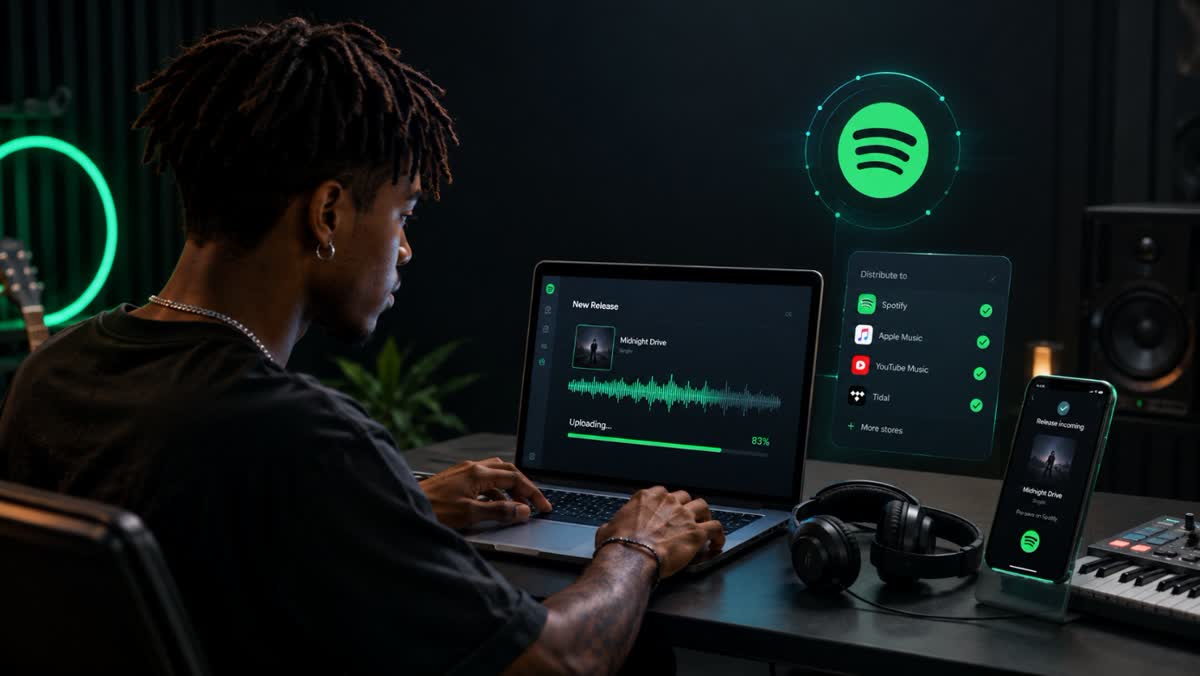
Once the project is ready, artists can start distributing it through Dibsteur and select Deezer from the available platforms.
There is therefore no need to separately arrange a release on Deezer and then repeat the entire process for Spotify, Apple Music, or other services. The same project can be prepared in Dibsteur and then sent to multiple destinations as part of its distribution.
This approach is particularly useful when an artist wants to publish their music on Deezer while maintaining a broader presence across streaming platforms.
Distribution can apply to a first single as well as a catalog containing several EPs or albums. Dibsteur notably offers unlimited releases in its current plans, allowing artists who release music regularly to organize their releases without having to pay separately for each new track.
Deezer for Creators: Managing Your Profile and Tracking Your Audience
Once the music is available on Deezer, Deezer for Creators takes over a different part of the work.
It is important to distinguish between the two roles: Dibsteur is used in particular to distribute music to Deezer, while Deezer for Creators is the tool offered directly by Deezer to artists and professionals to track and manage their presence on the platform.
Deezer for Creators allows users, in particular, to view listening performance, obtain information about their audience, and track certain data by country or playlist. Deezer also states that artists can manage certain information on their profile through the tool, including their biography and photo on the web version.
For an artist, the two tools therefore meet complementary needs. The distributor sends the project to Deezer, while Deezer for Creators then helps track what is happening specifically on this platform.
This also explains the many searches for Deezer for Artists or Deezer artist: once the music is published, managing the profile and analyzing the audience become a separate step in their own right.
Tracking Your Music Statistics on Deezer
Publishing a track does not yet show how it will develop. Some releases quickly find their audience, while others progress more slowly. When an artist begins to accumulate several singles or albums, it therefore becomes important to compare their performance rather than looking only at the most recent release.
Dibsteur provides detailed daily statistics for tracking distributed projects, while Deezer for Creators complements this tracking with information specific to Deezer. The tool makes it possible, in particular, to view performance over different periods and obtain data on countries, audiences, and playlists.
Artists can therefore maintain an overview of their distribution with Dibsteur while using Deezer-specific data when they want to analyze their presence on the platform more precisely.
Royalties and Revenue Generated on Deezer
Streams on Deezer can generate revenue for the relevant rights holders. However, there is no universal amount automatically paid for each stream, as compensation depends on various factors related to how the platform operates, the type of use, and the distribution of revenue.
Royalties from distributed projects are then reported through the distribution process. With Dibsteur, artists can view the revenue associated with their releases in the same environment used to manage their projects, and with Dibsteur’s Sérénité plan, artists keep 100% of their net royalties.
However, these royalties related to the distribution of a recording should not be confused with all the rights that may exist around a musical work, such as copyright or publishing rights.
Uploading Your Music to Deezer for Free: Is It Possible?
This question comes up frequently, but it is important to distinguish between a listener’s access to Deezer and the service used by an artist to distribute their catalog there.
To upload their own music to Deezer, artists generally go through a distributor. Not all distributors use the same business model: some charge for releases, others operate through a subscription, and some may apply different commissions.
Dibsteur currently operates with plans that allow artists to distribute their music projects to Deezer and the other platforms included in its network. Distribution should therefore not be presented as free when it is included in a paid plan.
Instead, it is more useful to look at what the price includes: number of allowed releases, royalties retained, statistics, platforms covered, and additional tools.
The current terms and pricing are grouped together in Dibsteur’s music distribution plans.
Deezer Among Other Streaming Platforms
Deezer is an important destination among streaming platforms, but artists generally do not benefit from making their catalog available on only one platform.
Listening habits vary greatly depending on users and countries. One person may listen to their music on Deezer every day, while another listens to the same artist on Spotify, Apple Music, or Amazon Music.
Dibsteur makes it possible to centralize this distribution across more than 35 platforms and digital services. The full list and the specific features of the different services are presented on our page dedicated to music distribution platforms.
The strategy can then differ from the distribution itself: an artist can make their music widely available while focusing their promotion on Deezer if their statistics show that a significant portion of their audience is there.
Adding Your Music to Deezer and Developing Your Artist Profile
Once the first track is published, the goal is no longer simply to have an empty artist page with one available track. As releases accumulate, the Deezer artist profile becomes a true presentation of the catalog: singles, EPs, and albums gradually build the artist’s musical history.
Deezer for Creators then makes it possible to work on certain aspects of this presence and observe how the tracks are being listened to. Adding a new project should therefore be considered as a continuation of previous releases rather than as an isolated publication.
For an artist who releases music regularly, this approach makes it possible to develop their catalog on Deezer while maintaining a central environment in Dibsteur for managing their various distributions.
Distribute Your Next Release to Deezer with Dibsteur
To upload a song to Deezer, an EP, or a full album, the principle remains the same: properly prepare the project, provide the necessary information, and then select Deezer during distribution.
Dibsteur then makes it possible to distribute the same project to the other selected platforms and track releases after they are published.