ISRC Code: Definition and How It Works
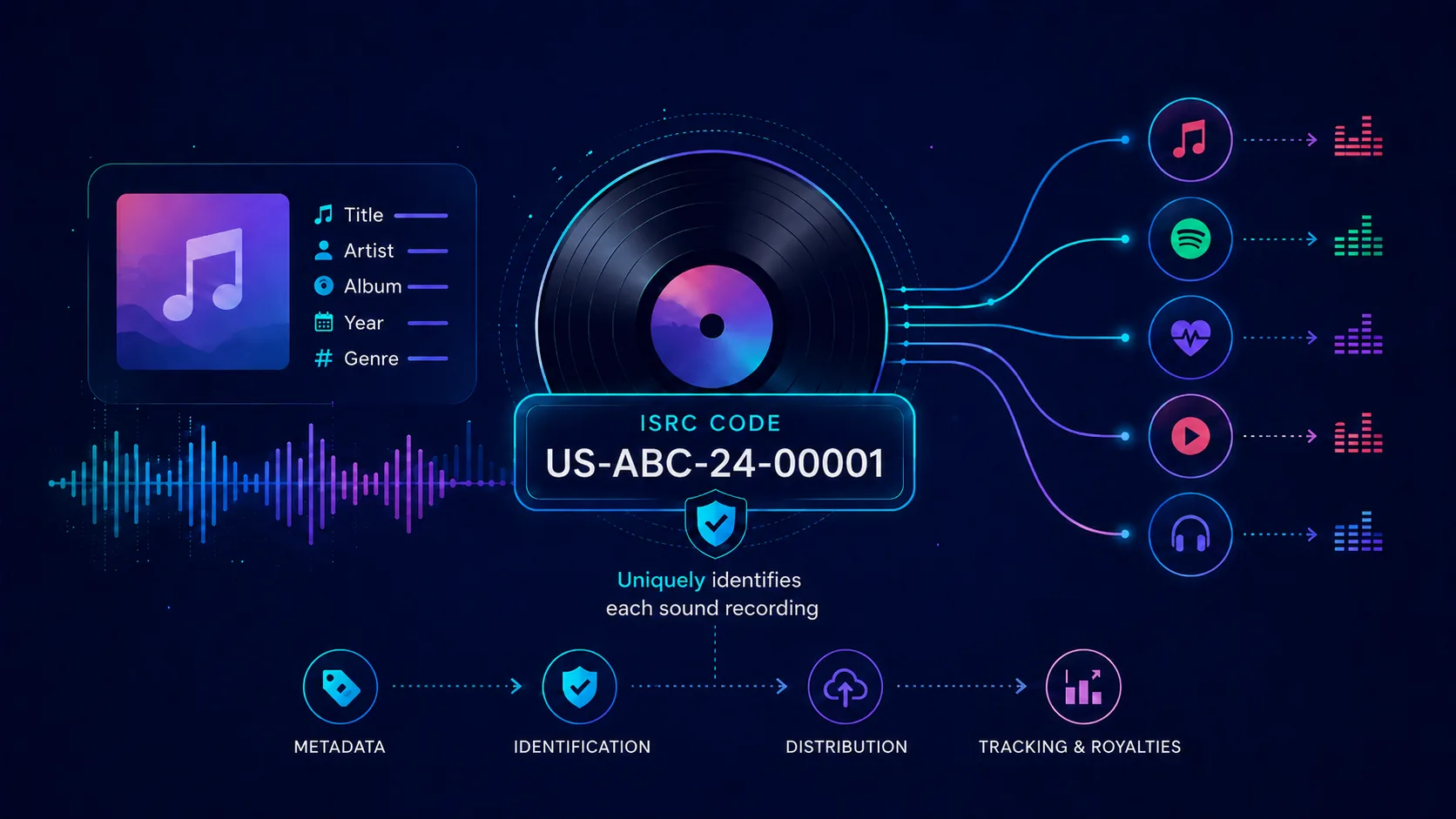
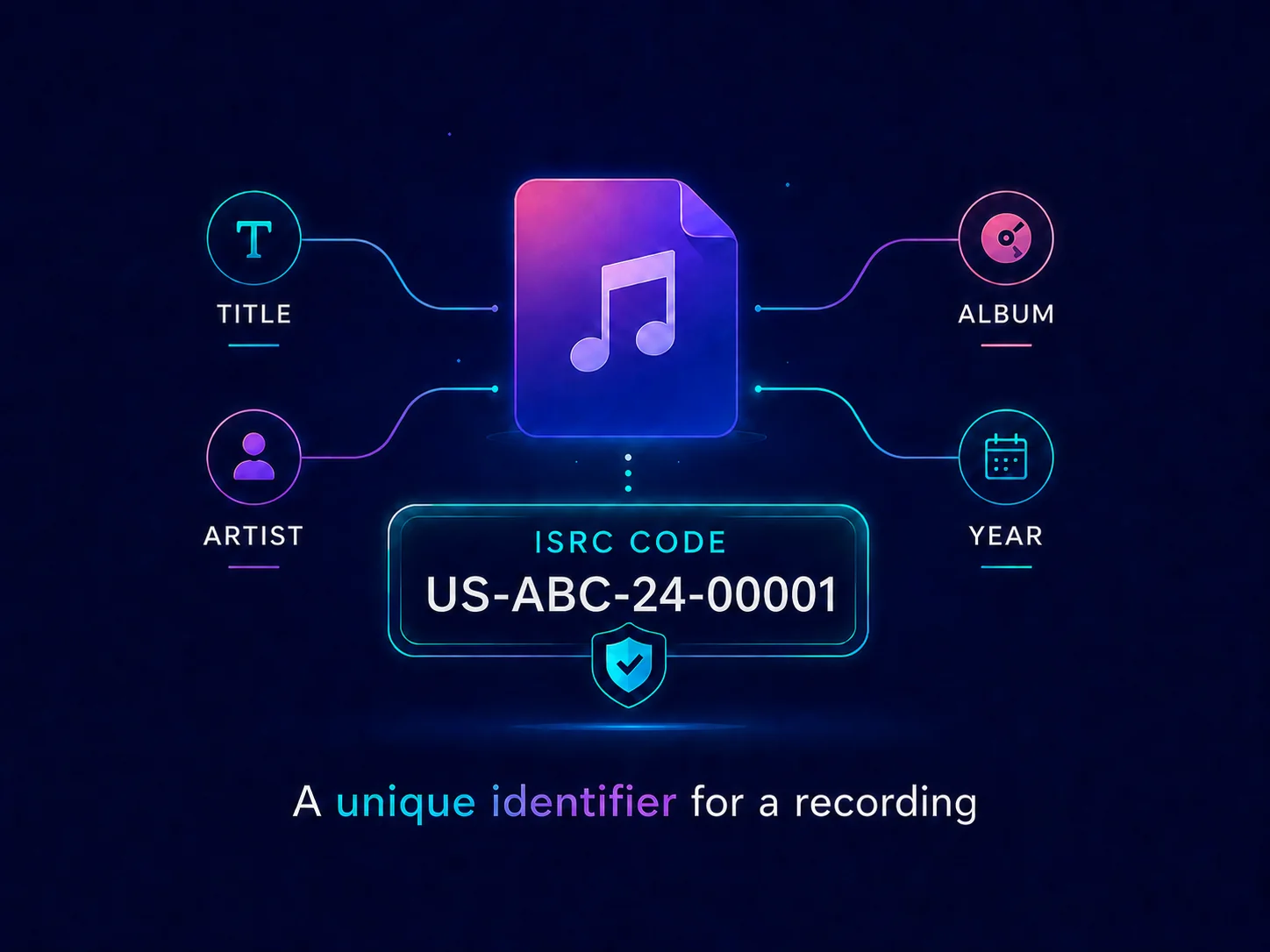
ISRC stands for International Standard Recording Code. It is an international identifier assigned to a sound recording or music video. The code therefore does not identify a song in the sense of the composition, an artist, or an entire album: it identifies a specific version of a recording.
Two different versions of the same track can therefore have different codes when they correspond to distinct recordings.
This is the case, for example, with a studio version, a live version, a remix, or a new version of the track. The ISRC then remains associated with the recording concerned throughout its use.
The Role of the ISRC Code in Music Distribution
The main role of the ISRC code is to avoid any ambiguity between different music recordings.
Two tracks can have the same title, two artists can also have similar or identical names, or the same track can exist in several versions.
The ISRC makes it possible to precisely identify the recording concerned, regardless of the platform on which it is distributed.
It is used in data exchanges between distributors, streaming platforms, and various players in the music industry.
For an artist, this identifier becomes particularly important when their catalog starts to become available on several services or when they want to transfer older releases to a new distributor.
Structure and Composition of an ISRC Code
An ISRC code contains 12 alphanumeric characters. It consists of four parts:
- 2 characters for the country code: for example, FR for France;
- 3 characters for the registrant code: they identify the entity to which the ISRC prefix was assigned;
- 2 digits for the year of reference: for example, 24 for 2024;
- 5 digits to identify the recording: this number distinguishes the track from other recordings assigned by the same registrant.
A code can therefore appear as follows:
FRABC2400001
To make it easier to read, it is often presented with hyphens:
FR-ABC-24-00001
Both formats correspond to the same ISRC code. The hyphens are only used to visually separate its different parts.
The year indicated in the ISRC corresponds to the reference year used when the code was assigned. It therefore does not necessarily mean that the track was recorded or released that year.
Getting an ISRC Code for Your Music
An artist or record label can obtain ISRC codes in several ways. Producers who want to manage their identifiers themselves can notably take the necessary steps with the relevant organizations to obtain their own prefix.
But when an artist uses a music distributor, the ISRC can also be assigned when preparing a new release. With distributors such as Dibsteur, the information required for distribution is centralized within the distribution process, so the artist can prepare their track and choose the music distribution plans that correspond to their project without having to manage each platform separately.
If a track already has an ISRC, the situation is different: you generally need to keep the existing identifier rather than generate a new one.
Finding the ISRC Code of a Track
When a track has already been distributed, its ISRC can generally be found in the information provided by the distributor used for that release. There are also databases and tools that allow you to perform an ISRC code search using information about a track.
This step is particularly important before changing distributors. If you want to transfer an existing catalog, retrieve the ISRC codes for your previous releases before starting the new distribution process. These identifiers will make it possible to maintain continuity for recordings that have already been released.
Keeping Your ISRC Code When Changing Distributors
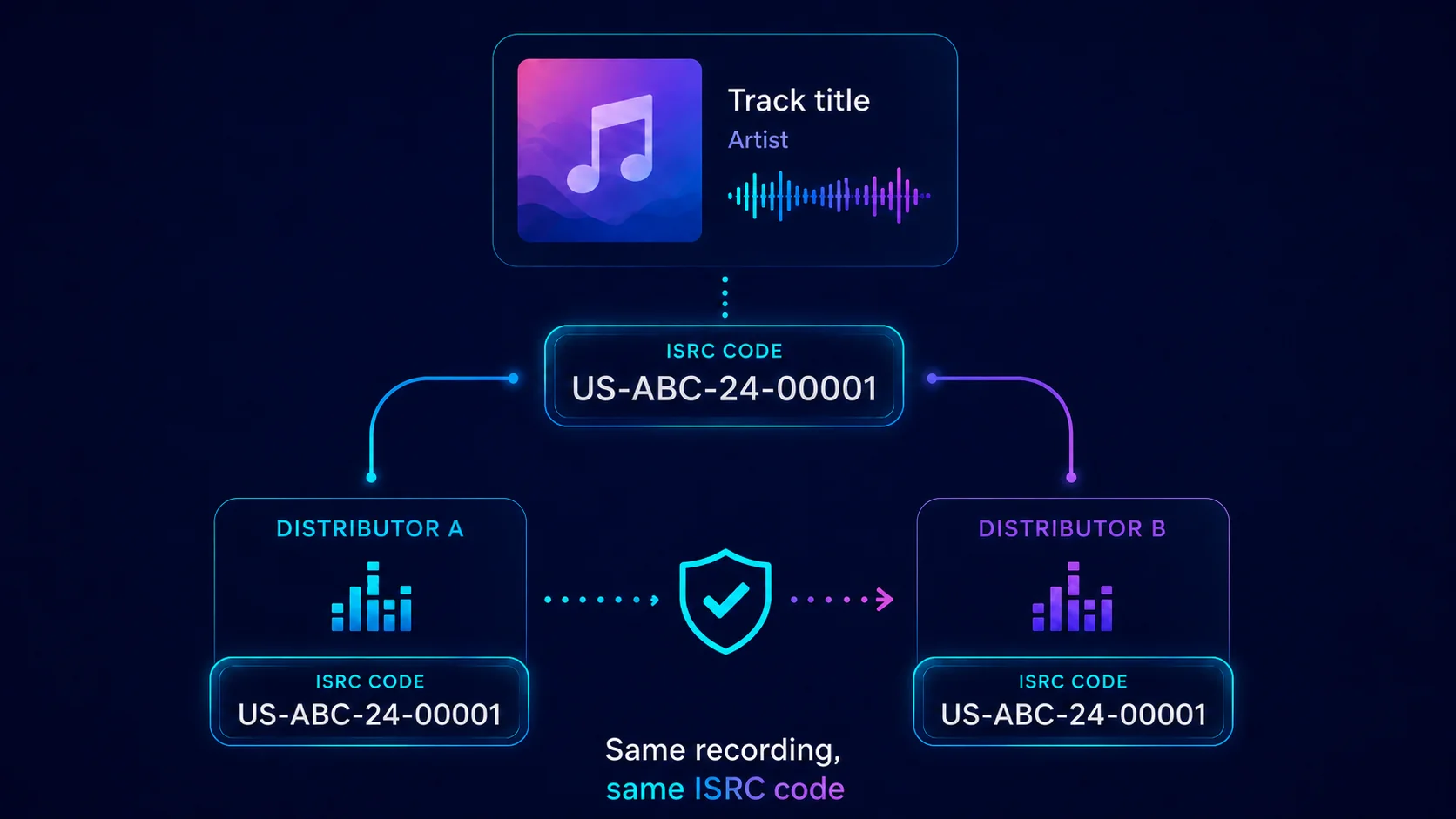
Yes, when it is exactly the same recording, you generally need to keep its ISRC. The code identifies the recorded track, not the company that distributed it.
Changing distributors therefore does not mean that the track becomes a new recording. If you transfer a release to Dibsteur, for example, the goal is to preserve the original information as much as possible: audio file, title, artist, release date, metadata, and existing ISRC code.
This makes it easier for platforms to recognize that it is the same content already present in their catalog.
This is particularly important when an artist wants to change distributors without unnecessarily losing the continuity of their releases.
New ISRC Code for a Remix, Live Version, or New Master
A new ISRC is required when it is a genuinely different recording. A remix, a new studio version, a live version, or certain significant changes to the master may therefore require a new identifier.
However, simply rereleasing exactly the same master through another distributor does not justify creating a new ISRC. The question to ask is therefore simple: is it still the same recording? If so, the existing ISRC should normally be retained.
ISRC Code, UPC, and EAN: Different Identifiers
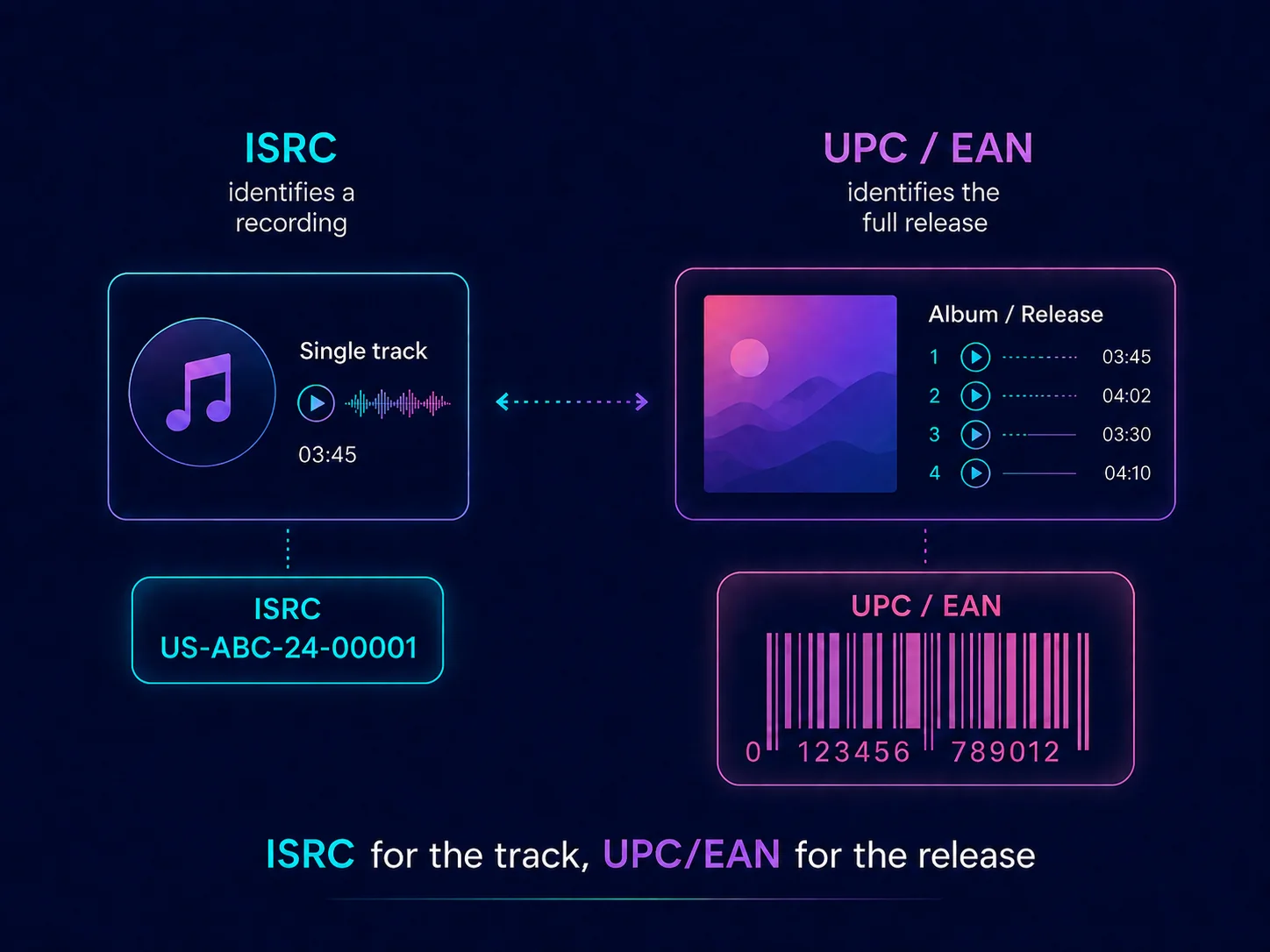
These identifiers do not serve the same purpose. The ISRC code identifies a specific recording, while the UPC or EAN code instead identifies a release as a whole, for example a single, EP, or album.
An album containing ten tracks can therefore have one identifier for the complete release and ten different ISRC codes, one for each recording. This distinction is important when preparing a distribution that includes several tracks.
ISRC Code and ISWC Code: Two Identifiers Not to Confuse
The ISRC and ISWC also correspond to two different things. The ISRC code identifies the sound recording, while the ISWC code identifies the musical work, meaning the composition itself. The same song can, for example, be recorded several times by different artists or in different versions. The musical work remains linked to the composition, while each distinct recording can have its own ISRC code.
This makes it possible in particular to distinguish what relates to the musical work from what relates to the recorded master.
The Role of the ISRC in Royalty Tracking
The ISRC plays an important role in identifying recordings and in the data exchanges used to track their use. However, the ISRC should not be considered a payment system. Platforms, distributors, and various organizations use several pieces of information to correctly identify tracks, track their use, and attribute revenue to the correct projects.
A correctly entered ISRC therefore makes it easier to track a catalog and prevents confusion between several recordings. The payment of revenue then depends on how the distributor and the platforms concerned operate.
ISRC Code and Music Distribution With Dibsteur
When an artist prepares a new release with Dibsteur, the ISRC is one of the pieces of information used to correctly identify each distributed recording.
How it works then depends on the situation of the track. For a first release, the necessary identifiers can be integrated into the distribution process. For a track that has already been released, it is important to keep the existing ISRC when the master remains identical.
This applies both to an independent artist and to an organization managing several projects. It does not replace music copyright, which concerns the work itself. Record labels can notably centralize several catalogs through the music distribution for record labels plan.
Dibsteur then makes it possible to master your track and distribute the same release across several platforms. Depending on your strategy, you can, for example, put your music on Spotify, distribute it on Deezer, or make it available on Apple Music.
The ISRC therefore remains linked to the track itself, regardless of the platform on which it is used.
Keeping Your ISRC Codes Organized to Manage Your Catalog
When an artist still has only a few tracks, managing ISRC codes may seem secondary, but it becomes much more important as the catalog grows.
Keeping a clear list of the ISRCs for each track makes distribution transfers, managing different versions of a track, and tracking the catalog over time easier.
It is therefore advisable to keep this information with the other important data for each release: master file, cover artwork, metadata, release date, and associated identifiers. This organization avoids having to search for the codes several years after the track was released.